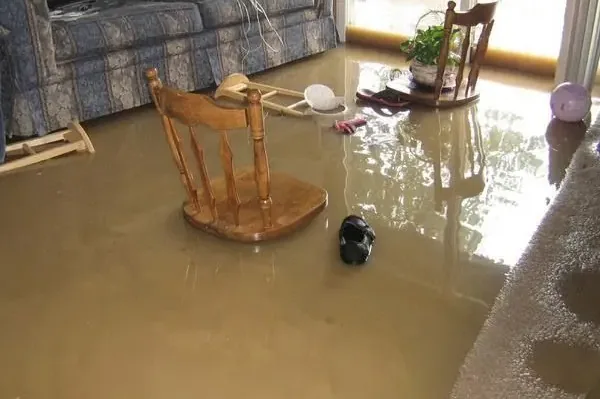
Apollo Beach is a waterfront community with canals that lead to Tampa Bay, and canal neighborhoods here saw storm surge from Hurricane Helene in September 2024. Surge is not rainwater. It is salt water carrying mud and debris, and it changes how a house is cleaned and dried.
Key takeaways
- Surge water comes from Tampa Bay and the canals, so it is treated as contaminated and not as clean water.
- Wet drywall, insulation and carpet are usually removed, not dried in place.
- The community sits at an elevation of about 7 feet, so low rooms and garages take water first.
- Salt in surge water leaves residue that can keep materials damp and corrode metal.
- Most homeowner policies do not cover flood, and county floodplain maps do not model coastal storm surge.
Why surge water is different
A rain leak or a broken pipe puts clean or mostly clean water in a house. Surge is the bay pushed inland by wind, and it carries what it picked up on the way.
Much of the original land here was mangrove and low ground once considered uninhabitable, which is a reminder of how close the water sits.
Because the water arrives from outside the property and not from a pipe, there is no single source to shut off. The only control is time: the sooner wet materials are out, the less damage spreads.
Homes at the canal edge and homes a block away can both be affected, since surge moves through streets and yards as well as canals.
Salt and sediment
Salt water leaves residue on floors and walls. Sediment settles in corners, under cabinets and inside wall bottoms.
Contamination
Surge mixes with runoff, fuel and sometimes sewage. That is why it is handled with protective gear and cleaning steps that clean water does not need.
Which homes and rooms take water first
Canal neighborhoods in Apollo Beach include Symphony Isles, a gated community of 314 properties on deep water canals that lead to Tampa Bay, and Bimini Bay, another canal neighborhood.
Symphony Isles has townhomes, canal front homes and large bay front homes, so the exposure differs from one home to the next.
Elevation matters in a community that sits at about 7 feet. A few inches of difference in a floor or slab can decide whether surge reaches the living space or stops at the garage.
Owners of townhomes and zero lot line homes should also think about shared walls, since water that reaches one unit often reaches the next.
- Garages and ground floor rooms near the canal
- Utility and laundry rooms with low floors
- Wall bottoms, cabinets and kitchen islands
- Air handlers and water heaters that sit low
- Detached sheds and storage areas
First steps after surge recedes
Safety comes first. Power should stay off in a flooded house until it is checked, and surge water should be treated as unsafe to touch.
A crew handling flood water cleanup in Apollo Beach begins with extraction and hazard control.
Pumping alone is rarely enough. Surge leaves mud, so floors need to be shoveled or rinsed once standing water is out.
Photos taken before the first shovel show the true condition of each room and help later claims.
- Shut off power at the main panel if it is safe to reach
- Photograph the high water mark inside and outside
- Wear boots, gloves and eye protection
- Do not use household appliances that touched the water
- Move undamaged items to a dry space
- Call a restoration crew for extraction
What gets removed and what gets dried
The general rule is that porous materials that soaked up surge water are removed. Hard materials can be cleaned and dried.
Removal also opens cavities so the framing can dry from the inside.
Mud and salt both matter. Mud hides moisture, and salt attracts it from the air, so a floor that looks clean can stay damp unless it is rinsed and dried properly.
Appliances, HVAC equipment and electrical devices that touched surge water should be checked by a trained technician before use, since hidden damage is common.
- Porous: drywall, insulation, carpet, pad, particle board
- Semi porous: solid wood, some furniture
- Non porous: tile, metal, concrete, glass
Removed materials
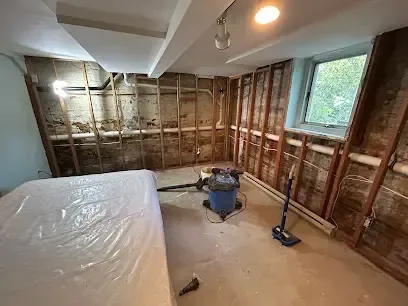
Drywall, insulation, carpet and pad, and particle board cabinets are normally removed after surge. Baseboards usually come off too.
Cleaned and dried materials
Concrete, tile, solid wood framing and some solid wood furniture can be cleaned, sanitized and dried. Readings show when they are ready.
Drying after the clean out
After wet materials are out, framing and subfloors are dried with air movers and dehumidifiers. In a humid coastal climate, drying equipment does the heavy work.
Details on how this phase works are on the hurricane water damage page, which also explains wind driven rain.
Equipment runs round the clock until readings meet the dry standard. Crews check readings on every visit and adjust equipment placement.
Open wall cavities dry faster than closed ones, which is another reason cutting drywall back is part of surge cleanup.
- Air movers push air across wall cavities
- Dehumidifiers lower humidity inside the house
- Moisture readings repeat until framing is dry
- Salt residue is rinsed where it can be reached
- Rebuilding starts only after readings meet the goal
Questions to ask before hiring a crew
After a storm, many homeowners compare crews and prices. A few simple questions separate careful work from rushed work.
A good crew explains the plan in plain words and puts it in writing before work starts.
- What will be removed and why?
- How will moisture be measured and recorded?
- How long will equipment run?
- What does the estimate include?
- Who documents the work for the insurer?
Written estimates
A written estimate lists the rooms, the work and the equipment. It also helps if a claim is later reviewed.
Daily records
Moisture logs and photos kept at each visit prove when the home was dry.
Insurance and the flood gap
Hillsborough County floodplain maps do not model coastal storm surge, so a home can face surge even where the map shows lower risk.
Most homeowner policies do not cover flood damage, and homes in high risk zones with a federally backed mortgage must carry flood insurance.
Residents who prepared for Hurricane Milton used sandbags and shutters and moved belongings to second floors, and those habits also shorten cleanup afterward.
The nearby Sun City Center area has its own flood cleanup page, since the same storms affect southern Hillsborough County.
- Ask the insurer in writing what is covered
- Keep photos from before cleanup
- Save every receipt and estimate
- Keep a log of every conversation
- Move valuables and documents upstairs
- Know the evacuation zone for the address
Questions
Is storm surge water different from rain flooding?
Yes. Surge comes from the bay and canals and carries salt, mud and contamination, so more materials are removed.
Can carpet and drywall be saved after surge?
Usually not. Porous materials that soaked up surge water are removed, while hard materials can be cleaned and dried.
Does homeowners insurance cover storm surge?
Most homeowner policies do not cover flood damage. Flood insurance is separate, so ask the insurer before cleanup.
Why did Apollo Beach canal neighborhoods get surge?
The community sits on low ground with canals that lead to Tampa Bay, so bay water can move inland during a storm.
How soon should cleanup start?
As soon as it is safe. Wet materials left in place get worse, and drying works best when started early.