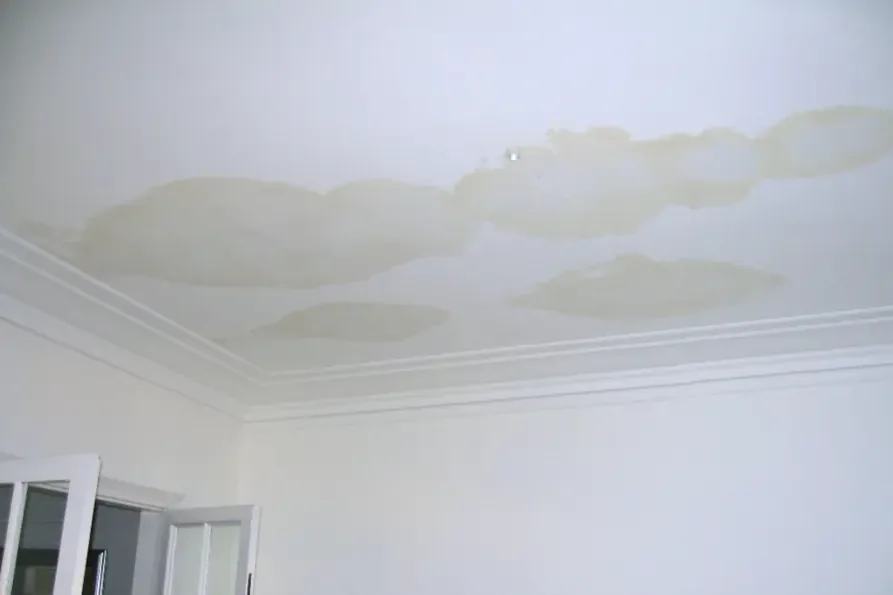
An air conditioner in Sun City Center works through long, humid summers, and the water it pulls out of indoor air has to go somewhere. When the condensate drain clogs, that water backs up into the pan, spills over and soaks the closet, the hallway floor and sometimes the ceiling below.
Key takeaways
- A clogged condensate drain is one of the most common reasons an air conditioner leaks inside a house.
- The first sign is often a damp stain, a musty smell or a soft baseboard near the air handler, not a puddle.
- Turn the system off at the thermostat and the breaker before mopping, so the unit stops making more water.
- Water travels under flooring and into wall bottoms, so a small spill can reach rooms away from the unit.
- Regular drain flushing and a working float switch are the cheapest protection against a repeat.
How an air conditioner makes water
Cooling air pulls moisture out of it, and that moisture collects on the coil as condensation. In a humid climate the volume adds up fast, enough to fill a drain pan in a short stretch of hot weather.
The water is meant to run out through a small drain pipe to a safe spot outside. When that pipe clogs with slime, dirt or debris, the water has nowhere to go but over the edge of the pan.
A system that runs most of the day in summer produces water most of the day. That steady flow is why a drain that was fine in spring can clog by midsummer.
The drain pan and the condensate drain
The pan sits under the coil. The drain pipe carries water away by gravity, so even a small blockage or a sag in the pipe can stop it.
In a house where the air handler sits in a closet or utility space, an overflow lands on the floor and the lower wall, which is where drywall holds the most water.
The float switch
Many systems have a float switch that shuts the unit off when the pan fills. If the switch is missing, stuck or wired wrong, the unit keeps running and the pan keeps overflowing.
Signs the drain has overflowed
Condensate leaks rarely announce themselves. They start small and show up in places that are easy to miss.
Residents in the community's single family homes, duplexes and townhouses should check these spots when the air conditioner has run hard for days.
A stain that grows after the system runs for a few hours is a strong clue. A stain that stays the same size after rain is more likely a roof problem than a drain problem.
- Water standing in the pan under the air handler or a rusted pan bottom
- A damp or soft baseboard or drywall near the closet
- A brown or yellow ceiling stain below the unit, especially in a second story room
- A musty smell in the hallway that does not clear when the system is off
- Warped or cupped flooring near the air handler
- Dripping at the thermostat side of a ceiling vent
What to do first
Speed matters because the water keeps spreading while the system runs. The steps are simple and need no tools.
A homeowner who sees water can follow this order and then call a water extraction crew if the floor or wall is wet.
- Switch the air conditioner off at the thermostat, then at the breaker.
- Stop standing water with towels and a wet vacuum if one is on hand.
- Take photos of the pan, the floor and any stained ceiling before cleanup.
- Move rugs, boxes and furniture off wet flooring.
- Open windows only if the weather outside is dry; humid air can slow drying.
Why the damage spreads farther than the spill
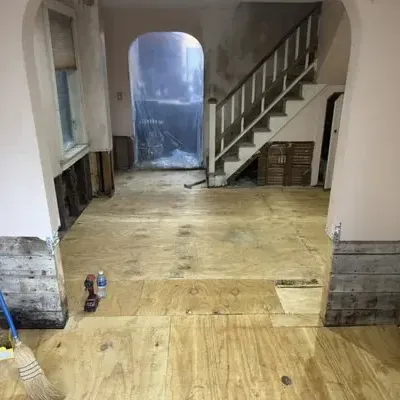
A pan overflow looks small, but water follows the lowest path. It runs under laminate and vinyl, wicks into baseboards and drywall, and soaks insulation in the ceiling below.
Tile can look fine on top while water sits under it. Carpet pad holds water like a sponge and stays wet long after the surface feels dry.
The community's high water tables and wet summers keep the air damp, which is why a wet wall here dries slower than one in a dry climate.
Homes with the air handler in an attic or a garage ceiling have a different risk. The overflow lands in insulation and drywall overhead, and the first sign can be a sagging ceiling panel.
Closets and hallways
Air handler closets often share a wall with a hallway or bedroom. Water that reaches the bottom of that wall spreads along the framing.
Ceilings below the unit
When the air handler sits above living space, drain overflow drips through the ceiling. A stain is the last sign, after the insulation and drywall are already saturated.
Common reasons the drain clogs
Condensate drains clog for ordinary reasons, and none of them needs a storm. Slime builds inside the pipe, dust and debris wash down from the coil, and insects or roots can block the outdoor end.
A pipe that sags or has a loose fitting can also hold water instead of letting it run out.
- Algae and slime growth inside the drain pipe
- Dirt from a dirty filter or coil washing into the pan
- A kinked, crushed or sagging drain pipe
- A blocked outdoor end or a cap that does not drain
- A pan that has rusted through and drips below the unit
- A tripped float switch that was never reset
What a technician checks
A heating and air technician clears the drain, tests the float switch and looks at the pan. The restoration crew then deals with the water that has already left the pan.
What a homeowner can watch
A quick look at the pan every few weeks, and a check of the outdoor drain end for steady dripping, catches most early problems.
How an AC leak is dried
Restoration starts with extraction, then moves to drying the materials that cannot be replaced. Moisture readings decide each step, not guesswork.
A crew handling an AC leak water damage job typically works through this order:
Neighboring Hillsborough County communities such as Ruskin share the humid climate, so the same habits apply there.
When both a technician and a restoration crew are needed, starting them together keeps the damage from growing. The wet area can dry while the technician works, as long as the system stays off.
- Remove standing water from the closet and hallway
- Check the wall, baseboard and flooring with a moisture meter
- Pull wet baseboards and cut out saturated drywall at the bottom
- Set air movers and dehumidifiers to dry what stays
- Re-test readings until framing and flooring are dry
- Clear the drain and test the float switch before the system returns to service
- Ask the technician to note the cause in writing for the insurer
Keeping the drain clear
Prevention is cheap compared with a ceiling replacement. Heating and air technicians handle the drain, and homeowners can watch for the early signs.
Neighboring communities such as Ruskin share the same humid climate, so the same habits apply across southern Hillsborough County.
- Have the drain flushed on a regular schedule
- Check that the pan is dry during every filter change
- Confirm the float switch shuts the system off when tested
- Watch for slow drips at the outdoor end of the drain pipe
- Keep stored items off the closet floor
Questions
Why is my air conditioner leaking water inside the house?
The most common cause is a clogged condensate drain. The pan overflows and water runs into the closet and walls. A frozen coil that melts or a cracked pan can do the same.
Should the air conditioner stay on after a leak?
No. Switch it off at the thermostat and breaker so it stops producing water, then call a technician and a restoration crew if flooring or walls are wet.
Can a small overflow damage a ceiling?
Yes. When the air handler is above living space, water soaks insulation and drywall before a stain appears. A moisture reading shows how far it went.
Does homeowners insurance cover an AC drain overflow?
Policies differ, and most homeowner policies do not cover flood. A sudden overflow from an appliance is treated differently from flood, so document the damage and ask the insurer.
How long does drying take?
Drying depends on how far water spread and what materials are wet. Moisture readings decide when it is finished, not the calendar.