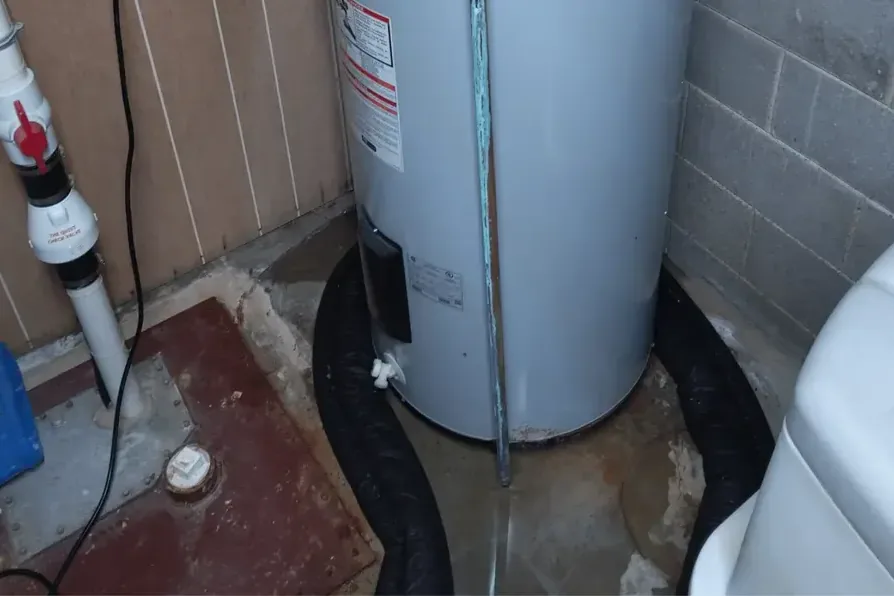
A home in Sun City Center can sit empty for a hospital stay, a recovery stay at a care facility or a trip, and a small leak does not wait for anyone to come back. A slow drip becomes a soaked floor over days, and the damage is usually larger than it would be in an occupied house.
Key takeaways
- An empty home loses the daily check that catches a drip early, so leaks run longer and spread farther.
- The usual sources are the water heater, toilet supply connections, washer hoses, the air conditioner drain and the roof.
- A neighbor, family member or manager can make a safe check without entering rooms that may be wet.
- Shutting off the main water supply before a long absence removes most of the risk.
- The longer water sits, the more flooring and drywall must be removed instead of dried in place.
Why an empty home is different
In an occupied house, a person hears the drip, sees the stain or smells the damp spot. In an empty house, nobody does.
The community has a median age of 70.4, its own hospital and several nursing home facilities, so planned and unplanned absences are part of normal life here. That makes a simple plan for the house worth having.
Families who live far away often learn about a leak from a neighbor or a county bill. A written plan, with names and phone contacts kept off the web, makes that call easy.
Days turn a drip into a flood
A tank that weeps a little at the bottom keeps weeping. A supply hose that bulges eventually splits.
Without anyone home, the water has days to move under flooring and into walls.
Slow leaks cause the widest damage
Large breaks get noticed on a water bill. Slow leaks do not, and they soak more material before anyone sees them.
Where leaks start
Most empty home losses trace back to a short list of sources. Each one has a typical pattern.
Even a small leak behaves differently when no one is home. The air conditioner may be off or set high, the house is closed, and damp air stays put, so the area under a leak becomes the best place for microbial growth to start.
- Water heater tank or its drain pan overflow
- Toilet supply connection or fill valve
- Washing machine hose and shutoff valve
- Dishwasher and refrigerator ice maker connections
- Air conditioner condensate drain
- Roof or window leaks after a heavy storm
A safe check by a neighbor or family member
A person asked to look in on a home can do a useful check without touching anything that may be wet or electrically unsafe.
If water is found, the main shutoff is the first step, and a water heater leak cleanup crew can take over from there.
If a person finds standing water, the safest move is to stay out of the room, shut off the water if that is easy, and call a restoration crew before walking through the wet area.
- Look for stains on ceilings and the bottoms of walls
- Check the garage or utility room floor around the water heater
- Smell for a damp, musty odor at the door
- Look at the water meter if it is accessible; a moving dial with nothing running suggests a leak
- Take photos before touching anything
- Turn off the main water supply if it is known and safe to reach
What the floor shows after days of water
When water has been present for days, materials behave differently than in a fresh spill.
Drywall is wet to a higher level, baseboards lift away, and flooring swells or cups. Carpet pad and insulation hold water that surface dry does not release.
A leak that has run for days also raises air humidity inside a closed house. Closed doors, no air movement and a warm room hold damp air in place, which slows drying even after the leak is stopped.
Hard flooring
Tile survives, but water sits under it and in the grout seams. Laminate and engineered wood swell at the edges and often have to come up.
Walls and cabinets
Water wicks up the wall, and cabinet bases hold moisture against drywall. Pulling a toe kick or a baseboard is the fastest way to see how far it went.
What to do when the leak is found
A discovery after days of absence feels overwhelming. A short order of steps keeps the first hour useful.
The aim is to stop the water, protect people and record the damage before cleanup begins.
- Stop the water at the main shutoff or at the fixture shutoff
- Switch off power to wet rooms if it can be done safely
- Photograph every wet surface and the leaking source
- Call the insurer to open a claim
- Call a restoration crew for extraction and a moisture map
- Keep wet items for the adjuster unless they are unsafe
Phone and notes
Write down the date and time the leak was found and who found it. This helps explain how long the water ran.
Contents and valuables
Move dry papers and small valuables to a dry spot. Leave large wet items until they are photographed.
How the drying is handled
A crew starts with extraction, then maps moisture so the right materials are removed and the rest are dried.
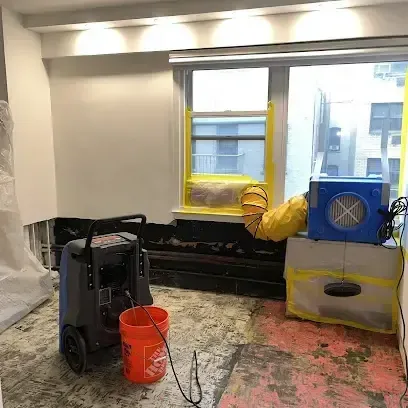
That is the work of structural drying after a long leak: air movers, dehumidifiers and readings repeated until the framing is dry.
A person who holds the keys for an owner in a hospital or care facility should keep the same shutoff plan and a regular visit schedule. A leak sensor that sends an alert to a family phone adds another layer.
- Extract standing water and pull saturated carpet pad
- Cut drywall back past the wet area
- Open wall bottoms and cabinet bases to air
- Run dehumidifiers and air movers with readings every visit
- Replace materials only when drying cannot save them
- Share the main shutoff location with one trusted person
- Keep a short list of emergency contacts in the home
Steps before a long absence
A short routine before leaving does more than any repair afterward. A supply failure inside a wall is covered in the burst and pinhole pipe service page, and the same shutoff plan helps there too.
Hillsborough County supplies water to homes here, so the account holder can also ask the county whether usage alerts are available.
- Turn off the main water supply and drain a few fixtures
- Set the water heater to vacation mode or off
- Leave the air conditioner on with a clear drain
- Give a trusted person the shutoff location
- Schedule regular check visits
Questions
How long can a leak run before damage is serious?
It depends on the source, but a slow leak running for days can soak a floor, wall bottoms and insulation. Damage grows each day water stays.
Is it safe for a neighbor to turn off the water?
Turning off the main water supply is usually safe if it is easy to reach. Avoid stepping into standing water near outlets or appliances.
Will a dry-looking floor still be wet?
Possibly. Water can sit under flooring and inside walls. A moisture meter finds it.
Should the water be turned off for any absence?
For a long absence, yes. A shutoff removes the main source of a flood while the home is empty.
What should be photographed for an insurance claim?
Wet floors, stained ceilings, the leaking appliance and the water meter. Photos before cleanup show the original condition.