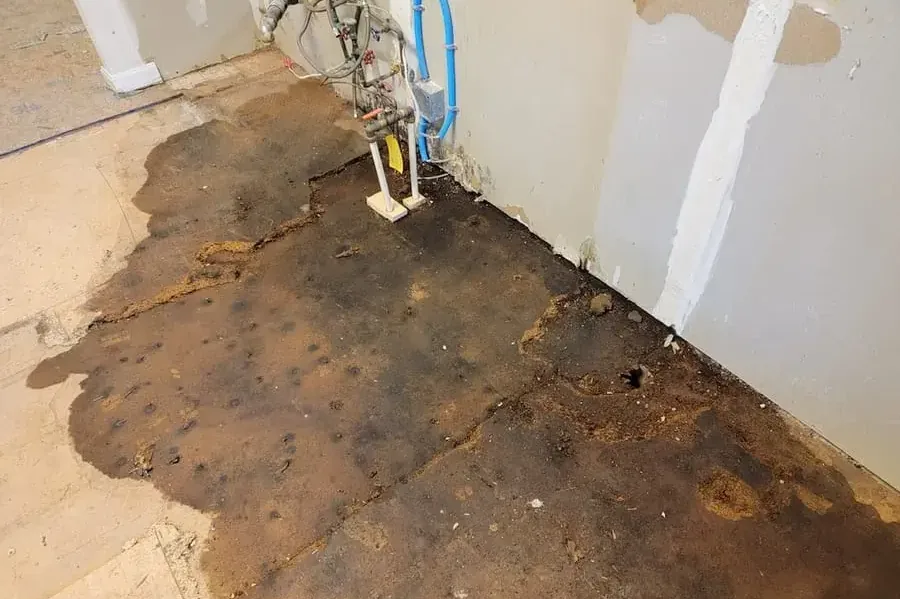
A slab leak is a break in a pressure pipe that runs under a concrete floor. In Sun City Center it is easy to miss because the water is out of sight, and the first clue is often a higher water bill from Hillsborough County, a warm patch on the floor or the sound of running water when everything is off.
Key takeaways
- A slab leak is a pressure pipe leak under a concrete floor, not a drain leak.
- The first clues are usually a rising county water bill, a meter that moves with all fixtures off, a warm floor spot or a hissing sound.
- A shutoff test and a plumber's leak detection confirm the location before any flooring is lifted.
- Repair belongs to a plumber; restoration handles the wet flooring, wall bottoms and slab surface.
- Documenting the readings and photos early makes an insurance claim easier.
What a slab leak is
In a house built on a concrete slab, the water supply pipes can run in or under the slab. When one cracks, corrodes or fails at a joint, pressurized water escapes under the floor.
The water follows the easiest path. It can rise through cracks, soak the underside of flooring or flow along the slab to the wall bottoms.
Plumbing materials and ages differ from home to home, so no single failure cause applies to every house. What stays the same is the result: water under a floor that nobody can see.
The main steps are the same whether the house is old or new: confirm the leak, stop it, dry the area, then rebuild. A homeowner who knows the sequence can ask better questions of every contractor.
Supply pipes versus drain pipes
Supply pipes carry pressurized water, so the leak runs constantly. Drain pipes only leak when something is draining, which is a different problem.
Why it stays hidden
Nothing is visible until water reaches the surface. By then flooring and drywall may already hold moisture.
Signs that point to a slab leak
No single sign proves a slab leak, but several together are a strong hint. Residents can check these without tools.
Heat is a clue when the leaking pipe is the hot water supply. A floor area that feels warm even when the air conditioner is cooling the room deserves a closer look.
- A county water bill that rises with no change in use
- A water meter that keeps moving when every fixture is off
- A warm spot on tile or carpet that does not come from the sun
- The sound of running or hissing water in a quiet house
- Damp baseboards, wet carpet or a musty smell along one wall
- Tile that lifts or grout that turns dark in a single area
Reading the meter and the bill
Hillsborough County supplies water to homes in Sun City Center, so the county's bill and meter are the first evidence.
To test, stop all water use, find the meter and watch the leak indicator or dial. If it moves, water is leaking somewhere between the meter and the fixtures.
A rising bill alone does not prove a slab leak. Irrigation, a running toilet or a changed routine can also raise the bill.
The meter test separates those causes from a pipe leak.
- Turn off every faucet, the ice maker and the washer
- Check the dial or small triangle on the meter
- Note the reading, wait, and read again
- Close the main shutoff at the house and watch again; if the meter stops moving, the leak is inside the house
- Write down both readings and times
Confirming the location
A plumber uses listening devices and thermal tools to find the break without tearing up the whole floor. The location decides how much flooring comes up.
Restoration works best when the plumber's finding is in hand. The slab leak water damage service covers the drying that follows.
The restoration crew does not repair the pipe. Its role starts when the plumber has stopped the leak, so the wet flooring and slab can be dried correctly.
When the break location is known, a plumber can often repair the pipe by opening the floor at one spot, or reroute the pipe through a wall or ceiling to avoid the slab.
Why the plumber comes first
Drying a floor while the leak is still running only wastes effort. The pipe has to be isolated or repaired before drying starts.
What the restoration crew needs
A crew needs the break location, the date it was found and the rooms where flooring is damp. Photos of the meter and the bill help the claim.
What the damage looks like at the surface
Water that escapes under a slab does not always rise through the concrete. It can travel sideways and soak wall bottoms first.
The effects depend on the floor covering above the slab.
- Carpet: damp patches, a musty smell and a wet pad
- Tile: loose tiles, dark grout, hollow sounds when tapped
- Laminate and vinyl: lifted edges, buckling and soft spots
- Wood: cupping, gaps and a sour smell from below
- Walls: stains at the bottom and swollen baseboards
Carpet and pad
Pad holds water for a long time. Carpet over a leak is often pulled so the slab can dry.
Tile and hard floors
Tile can stay in place while the slab dries beneath it only if the water is limited. Larger leaks mean tile comes up.
How a slab leak floor is dried
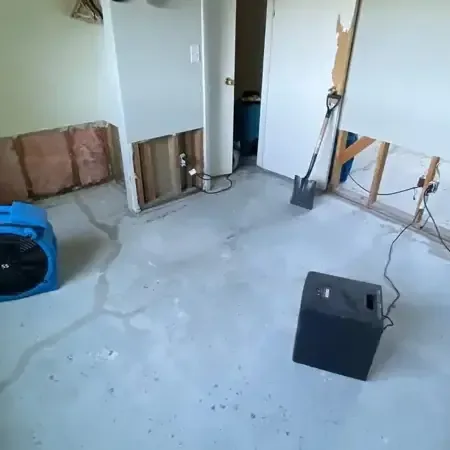
Once the leak is stopped, flooring over the wet area is usually lifted so the slab surface and wall bottoms can dry.
Moisture readings decide each step, and the same structural drying steps apply to walls and cabinets that took on water.
Water damage from a slab leak is often paired with a failure inside a wall or ceiling. The burst and pinhole pipe service page covers leaks that start above the slab.
Both cases start with finding and stopping the water, then drying everything it touched.
Insurers often ask for the date of discovery, the plumber's written finding and the moisture readings. Keeping these in one folder shortens the claim.
- Lift flooring over the wet area
- Pull baseboards and check wall bottoms
- Dry the slab surface and framing with air movers and dehumidifiers
- Remove wet pad and underlayment
- Test readings until the area meets a dry standard
- Reinstall or replace flooring only after drying
Documenting for the insurer
A slab leak claim goes smoother with clear records. Insurers ask what was found, when, and how the cause was confirmed.
Keep the plumber's report with the restoration invoice, and ask the insurer in writing which parts of the repair the policy covers.
- Meter readings with dates and times
- Photos of damp flooring and wall bottoms
- The plumber's finding and invoice
- Moisture readings from the restoration crew
- Receipts for any temporary housing
Questions
What is the first sign of a slab leak?
Often a higher water bill or a meter that moves when nothing is running. A warm floor spot or the sound of running water can also show it.
Can a slab leak be fixed without tearing out the floor?
Sometimes a plumber can reroute the pipe. The wet flooring still has to be dried or replaced where water spread.
Who fixes the pipe and who dries the floor?
A plumber repairs or reroutes the pipe. A restoration crew dries the floor, walls and slab after the water is stopped.
Does the county fix a leak inside the house?
The county supplies the water to the meter. Pipes inside the home are the owner's concern.
How can a leak be proven for insurance?
Meter readings with times, photos of damp flooring and the plumber's finding show the cause and the date.